
Home / Blogs
POS Meaning Explained - What Does POS Mean and Why It Matters for Modern Businesses?
07 Apr 2026
Admin
Have you ever paid for something at a store and noticed how fast the checkout process is? One scan, one tap of your card, and the transaction is done. But have you ever wondered what technology makes this possible? What system records the sale, updates inventory, and confirms payment in seconds? Understanding the pos meaning helps answer these questions. Many business owners hear the term often, yet they may not fully understand how important it is.
Have you ever paid for something at a store and noticed how fast the checkout process is? One scan, one tap of your card, and the transaction is done. But have you ever wondered what technology makes this possible? What system records the sale, updates inventory, and confirms payment in seconds? Understanding the pos meaning helps answer these questions. Many business owners hear the term often, yet they may not fully understand how important it is.
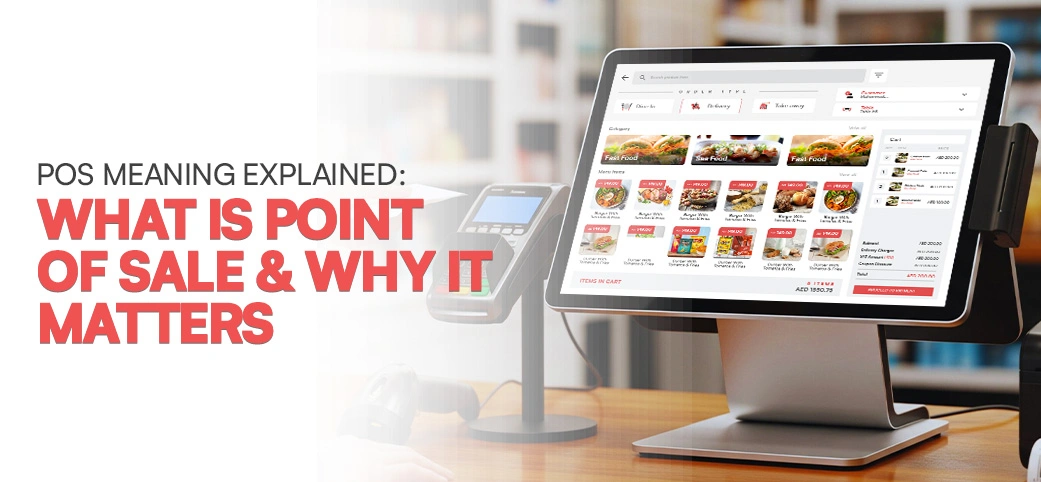
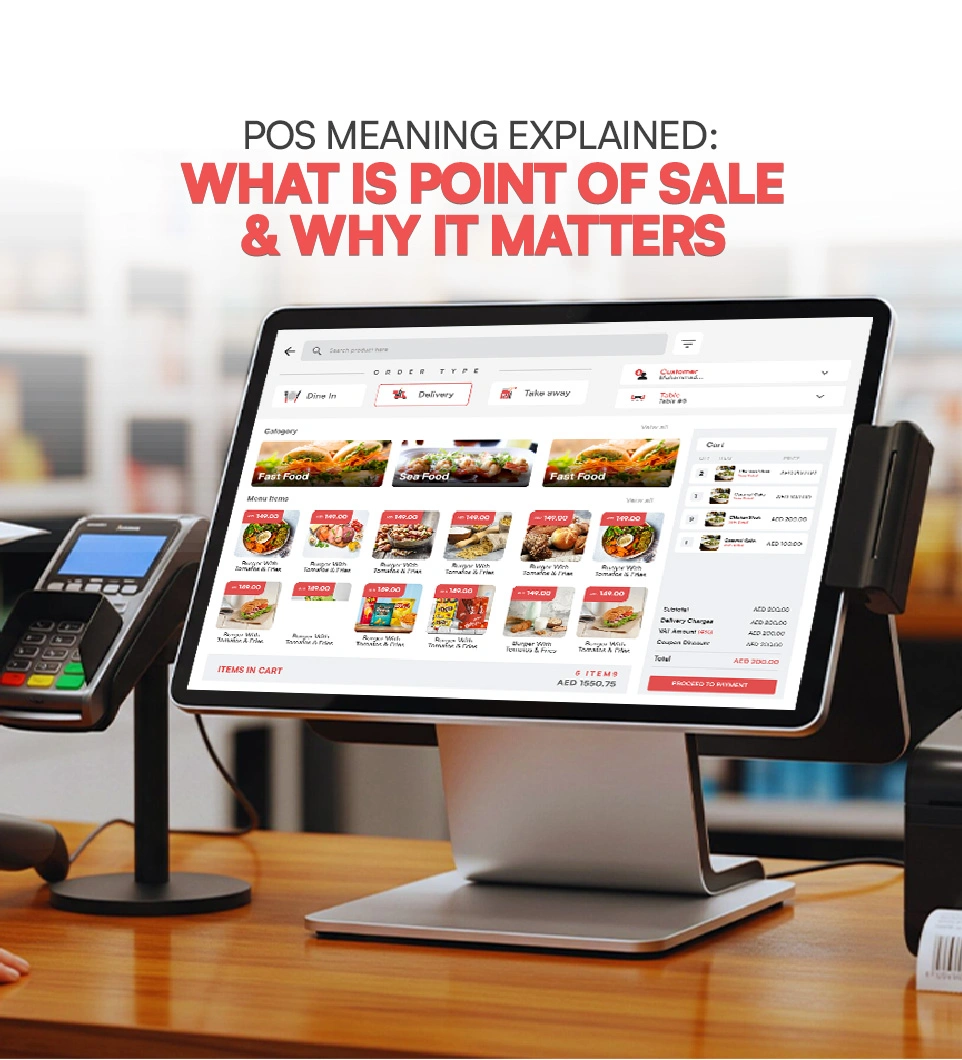
In simple terms, POS refers to the place where a transaction happens between a customer and a business. It is the point where goods or services are exchanged for payment. When people ask what does pos mean, they are usually referring to the system that manages this transaction smoothly.
Today, businesses rely heavily on digital tools to handle payments and sales. Modern solutions like Fougito help companies simplify operations, manage orders, and track business performance. Learning the pos meaning can help business owners understand why these systems are essential for modern operations.
What Is POS? Understanding the Basics
To fully understand the pos meaning, it is important to start with the basics. In business terminology, POS refers to the moment and location where a customer completes a purchase.
Many people ask what is pos or what is a pos when they encounter the term for the first time. The answer is simple. A POS is a system used by businesses to process payments and record sales transactions.
The pos full form is Point of Sale. This means the exact point where a sale takes place. Businesses use POS technology to manage the entire checkout process.
Understanding the pos meaning also involves looking at both the technical and business perspective. Technically, it refers to the hardware and software used for transactions. From a business point of view, it represents the place where revenue is generated.
POS Full Form and Definition
Define POS in Business Terms
In retail and hospitality industries, businesses often define pos as the system used to process sales and manage payments. The point of sale meaning becomes clear when you look at a real store or restaurant checkout counter.
For example, when a cashier scans products and processes payment, that location becomes the point of sale. The system records the purchase and updates the company’s records instantly.
This is why understanding the pos meaning is essential for businesses that want to manage transactions efficiently.
Where Does a POS Operate?
POS technology is used in many industries today.
Retail stores use it to process purchases quickly and manage inventory. Restaurants and cafés rely on POS to handle orders and billing. Many online businesses also integrate POS solutions to manage digital transactions. Even service-based businesses such as salons and repair shops use POS tools for payments and customer management.
In daily business operations, POS plays a major role in completing transactions smoothly. When customers purchase products, the system calculates totals, applies taxes, and records payments.
For retailers and restaurants, understanding the pos meaning helps them see how the technology supports business growth. It ensures accurate billing and helps keep track of every sale made during the day.
POS also help businesses manage customer information and maintain detailed sales records.
Key Functions of a POS
A modern POS performs several important tasks that help businesses operate efficiently.
Sales Processing
Sales processing is the most visible function of a POS. When a product is scanned, the system instantly identifies the item and adds it to the order. It also calculates the final bill, including taxes and discounts.
This automated billing process makes checkout faster and reduces human errors.
Payment Handling
A POS system supports multiple payment options. Customers can pay using cash, credit cards, debit cards, or digital wallets. The system verifies electronic payments through secure connections.
These flexible payment options make transactions convenient for customers.
Data Recording and Reporting
POS automatically record every sale. This data helps businesses generate reports and analyze performance. Managers can review daily revenue, popular products, and customer trends.
This feature makes the pos meaning more powerful because it transforms a simple checkout process into a valuable business tool.
Why POS Meaning Is Important for Businesses
Understanding the pos meaning helps businesses choose the right technology for their operations. A reliable POS system simplifies many daily tasks and improves efficiency.
Businesses benefit from faster transactions, accurate reporting, and better inventory management. These advantages help owners make informed decisions and improve their overall strategy.
Another reason the pos meaning matters is customer satisfaction. Quick checkout and smooth payment experiences leave a positive impression on customers.
Business Benefits of Using a POS
Operational Efficiency
POS improves operational efficiency in many ways. Employees can complete transactions quickly without manual calculations. This reduces errors and saves valuable time.
Fast checkout also allows businesses to serve more customers during busy hours.
Inventory Control
Inventory management becomes much easier with POS technology. Every time a product is sold, the system automatically updates stock levels. Businesses can receive alerts when items are running low.
This helps owners restock products before they run out.
Customer Experience
Customer experience improves significantly when businesses use a POS system. Quick billing and multiple payment methods make the checkout process smooth and convenient.
Happy customers are more likely to return and recommend the business to others.
Modern POS Systems: More Than Just a Cash Register
In the past, businesses used simple cash registers to record sales. These machines could only store money and print receipts. Over time, technology evolved and transformed these devices into advanced digital systems.
Modern POS platforms now offer powerful features such as cloud storage, real-time analytics, and integration with online services. Businesses can monitor performance, manage multiple locations, and track sales instantly.
Companies like Fougito provide advanced POS solutions designed specifically for restaurants and retail businesses. These systems combine payment processing, inventory tracking, and reporting tools in one platform.
Cloud-Based POS Advantages
Remote Access and Real-Time Data
Cloud-based POS allows business owners to monitor operations from anywhere. Sales data is updated instantly, which means managers can track performance in real time.
This visibility helps businesses identify trends and improve decision-making.
Scalability and Integration
Another advantage of cloud POS is scalability. Businesses can easily expand the system as they grow. They can also integrate POS tools with online ordering platforms and delivery services.
This flexibility makes POS technology suitable for businesses of all sizes.
Final Thoughts
Understanding the pos meaning helps businesses recognise how important this technology is in modern commerce. POS stands for Point of Sale, the moment when a customer completes a purchase and payment is processed.
Today’s POS does much more than record sales. They help businesses manage payments, monitor inventory, and analyse performance in real time.
By adopting smart POS solutions, businesses can improve efficiency, deliver better customer experiences, and stay competitive in an increasingly digital marketplace.